
Learner Engagement for Learning Businesses
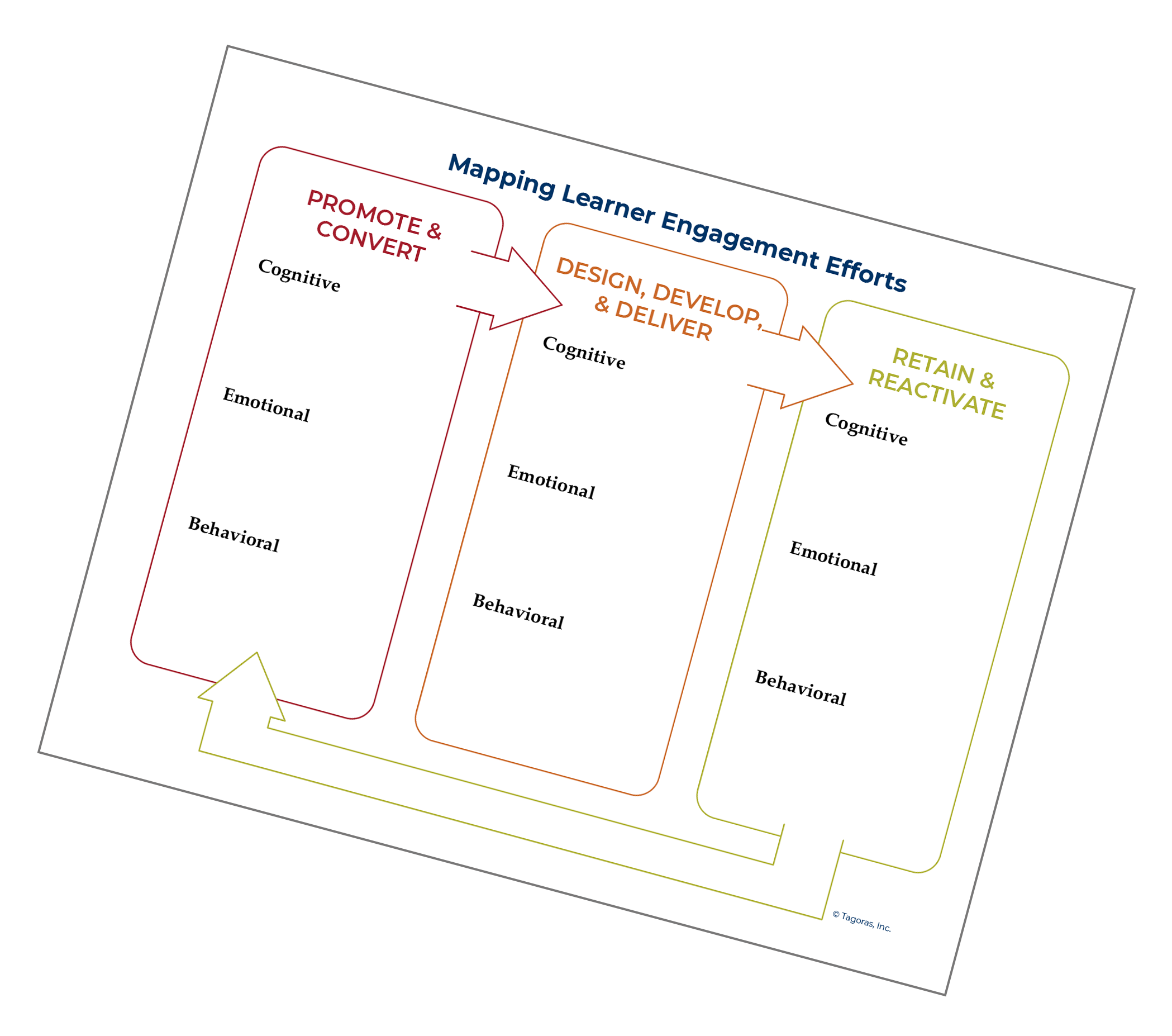
Creating and delivering engaging learning experiences is a top goal for most learning businesses. But what is learner engagement, and how can you most effectively cultivate it? That’s we address in “Learner Engagement for Learning Businesses.”
3 Dimensions of Engagement
There are three dimensions to learner engagement:
- Cognitive engagement has to do with what learners think.
- Emotional engagement deals with how learners feel.
- Behavioral engagement is about what learners do.
3 Conditions Required for Engagement
Engagement can’t happen when one of the conditions that make it possible is inadequate or missing entirely:
- Meaning, the sense that participating in a learning experience and the related effort are relevant and will provide a return on investment
- Safety, the sense of being able to participate as one’s true self without fearing damage to self-image, status, or career
- Availability, the sense of having the physical, emotional, and psychological resources necessary to participate in a learning experience
3 Times to Foster Engagement
For maximum results, signals and supports of engagement should begin before the learning experience (promotion and conversion), continue during the learning experience (through appropriate design, development, and delivery), and be reinforced after the learning experience ends (retention and reactivation).
The Learner Engagement Loop
To help make focusing on learner engagement concrete and tangible, we created the learner engagement loop, a simple flowchart with three boxes, which you can find in the PDF resource, which also goes into more detail on all of the above, as well as providing ideas for things your learning business might do to foster engagement.
Check out our discussion of the learner engagement loop on the Leading Learning Podcast for more about what it is and how to use it.